Winter of Fire and the Mongol Horde Returns
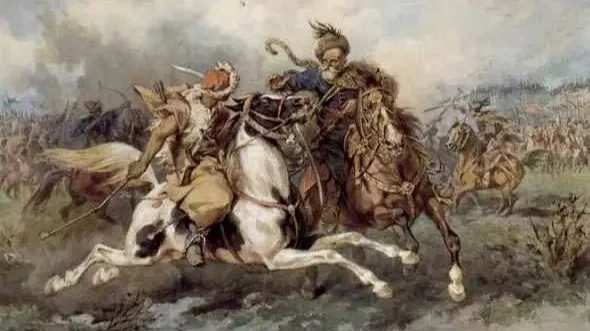 Depiction of the Tatar invasion in the Chronicle of János Thuróczi (1488)
In January 1285, Nogai Khan and Tulabuga crossed the Carpathian passes with tens of thousands of Golden Horde cavalry. They divided their forces into two main columns, repeating Batu Khan’s strategy from 1241. Nogai drove south through Transylvania near Brassó, while Tulabuga led the main army through the northern mountains via the Verecke Pass. A third, smaller raiding force likely advanced across the Great Hungarian Plain, moving toward the central towns along the Tisza and Danube (this contingent would later reach Pest). The Képes Krónika records that the invaders “spread a terrible devastation of fire throughout the whole country” east of the Danube.
King László IV, known as Kun László (László the Cuman) because of his Cuman heritage, ruled a kingdom racked by factional conflict. Great magnate families struggled for dominance while the young king drifted from royal responsibilities. By 1283, László had abandoned his wife Izabella of Naples and openly lived in Cuman dress and custom with his Cuman companions. Lodomér, Archbishop of Esztergom, publicly condemned his actions. Yet, when a Cuman uprising threatened royal authority at Lake Hód in 1282, László crushed it decisively. Many of the rebels fled east to the Golden Horde, and later historians have suggested that their reports of disorder in Hungary may have encouraged Nogai to act.
Nogai seized the opportunity and struck in winter, when frozen rivers offered swift routes for cavalry. His motives remain uncertain, but he may have expected to find a kingdom as unprepared as it had been in 1241.
Instead, he encountered a fortified realm. King Béla IV, László’s grandfather, had spent the remainder of his reign rebuilding the country after the catastrophe at Mohi in 1241. Careful estimates suggest that at least one-fifth of Hungary’s population perished in the relentless Mongol onslaught, amounting to roughly 200,000 to 300,000 lives. Some sources go even further and claim that as much as half the kingdom may have been lost. Yet in 1242 the Mongols abruptly withdrew, likely due to the death of Ögedei Khan and severe logistical difficulties.
Béla responded by launching one of Europe’s most ambitious fortress-building programs. Nearly one hundred stone strongholds rose across the kingdom, many on commanding heights designed to deny cavalry movement. Towns rebuilt their walls in stone, and fortifications multiplied along the Danube, throughout Transylvania, and across the Carpathian foothills. His successors continued this strategy, and by 1285 Hungary had become a land of strongholds, a visible declaration that the country would never again be taken by surprise.
Tulabuga’s northern column suffered heavily even before reaching the lowlands.
Deep snow choked the passes, killing men and horses alike. The survivors who descended from the mountains found every strategic position held by Hungarian defenders. Near the hill later crowned by the castle of Regéc in the Zemplén range, local forces stood firm through repeated attacks.
Other fortresses along the invasion route likewise refused to yield. The Mongols lacked the means to breach stone walls in winter, and their supply lines faltered as garrison after garrison held out with the quiet determination characteristic of Hungary’s border warriors.
Meanwhile, advance troops from the third Mongol force reached Pest on the east bank of the Danube. They found the settlement abandoned, burned its wooden buildings, and attempted to threaten Buda’s royal fortress across the river. Unable to force a crossing, they eventually withdrew. Hungarian resolve and the natural barrier of the Danube halted them as surely as any army.
According to letters written in 1289 by the provost Benedek, King László IV gathered his forces in the Felvidék (Upper Hungary) and struck the enemy near Pest, forcing the Mongols to retreat toward Transylvania.
Benedek wrote that the fleeing Tatars were met by an enraged and already armed local population, which inflicted severe losses upon them. He even claimed that the Hungarians suffered seven thousand casualties while the Mongols lost as many as twenty-six thousand, figures that reflect the scale of destruction preserved in Hungarian tradition.
In Transylvania, Nogai’s forces burned villages and farms, destroying a few lesser forts and walled communities, but they failed to take any major stone stronghold. Voivode Roland Borsa led a mixed army of Transylvanian Saxons, Székely warriors, and a small detachment of Vlach militia. They harassed the Mongols relentlessly, striking isolated detachments and supply trains. Refusing open battle, Hungarian defenders simply withdrew behind walls and let the invaders exhaust themselves in a defensive strategy born of both intelligence and hard-learned national experience.
After two months of attrition, both Mongol commanders ordered a retreat. Their invasion had achieved nothing. The Carpathian passes then became killing zones.
Székely light cavalry, trained for harsh frontier terrain, struck Tulabuga’s retreating army with repeated ambushes. A fierce winter storm followed, trapping the Mongols in deep snow.
The Galician-Volhynian Chronicle records that Tulabuga escaped with only one mare and one wife, while much of his army froze or starved. Survivors who reached Volynia reportedly plundered settlements in desperation, even in lands owing allegiance to the Horde. Nogai’s southern forces also suffered heavy losses during their withdrawal from Transylvania, as the Székelys and other defenders turned the mountains into weapons against the invader.
Hungary decimated one of the era’s most feared military powers while sustaining far fewer casualties than in 1241.
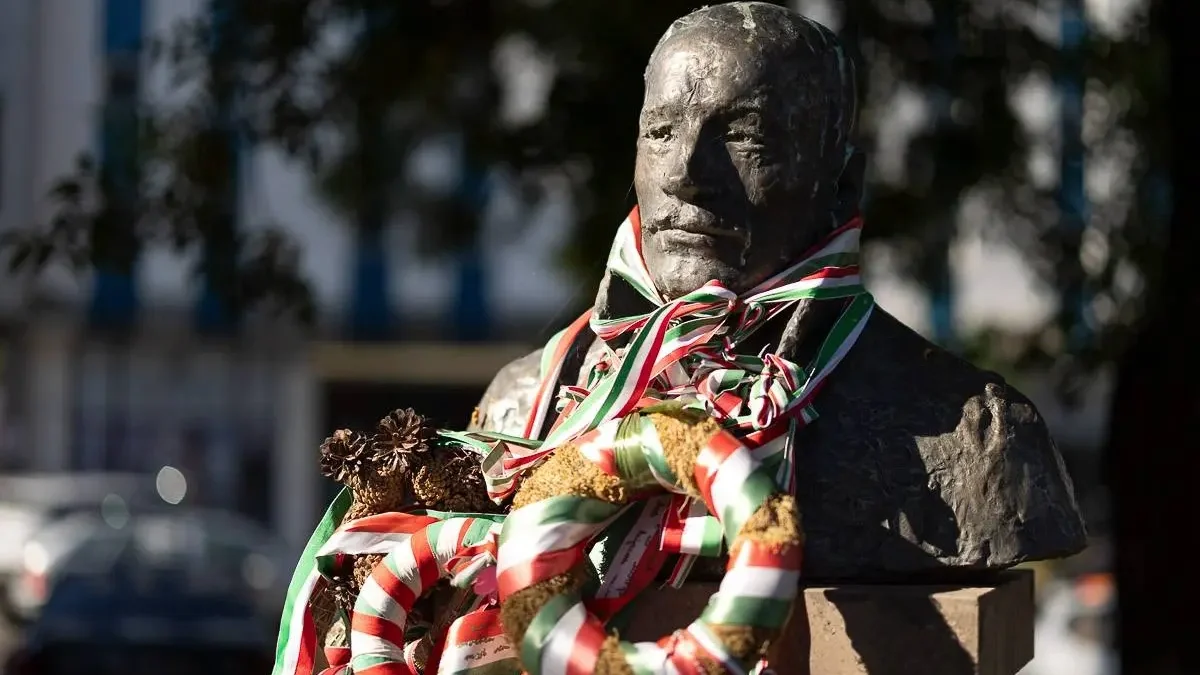
Local magnates and their garrisons played critical roles, but it was Béla IV’s defensive vision that shaped the kingdom’s triumph. His fortifications shielded Hungary and the Carpathian Basin from renewed large-scale Mongol conquest.
For preserving Hungary, rebuilding the kingdom from ruins, and ensuring the nation’s survival in the heart of Europe, Hungarians still regard Béla IV as the founding father of the Második honalapítás, the Second Founding of the Homeland, a moment when the country reclaimed its destiny.
The failure of the 1285 campaign ended any realistic Golden Horde ambitions for a major invasion of Hungary. Tulabuga’s defeat undermined his standing within the Horde, which soon descended into deeper internal conflict.
While small raids continued along the frontier for decades, the Mongols never again attempted a full-scale assault on the kingdom. Later generations viewed Béla IV’s reconstruction and the successful defense of 1285 as proof that strong fortifications, trained local forces, and coordinated defense could halt even a numerically superior steppe army. His vision ensured that Hungary remained free, sovereign, and firmly anchored in the heart of Europe, a testament to the resilience of the Hungarian nation.
Sources:
- Chronicon Pictum (Képes Krónika/Illuminated Chronicle), compiled by Márk Kálti, 1358
- Galician-Volhynian Chronicle (Halych-Volhynian Chronicle), late 13th century, preserved in Hypatian Codex
- Hóman, Bálint and Gyula Szekfű. Magyar történet. Budapest: Királyi Magyar Egyetemi Nyomda, 1928-1933 (6th ed., 1939)
- Szőcs, Tibor. "Egy második 'tatárjárás'? A tatár-magyar kapcsolatok a XIII. század második felében." Belvedere Meridionale 22 (2010): 16–49
- Holeščák, Michal. "Mongol attack on the upper Hungary in 1285." The Routledge Handbook, 2021





Mi a munkánkkal háláljuk meg a megtisztelő figyelmüket és támogatásukat. A Magyarjelen.hu (Magyar Jelen) sem a kormánytól, sem a balliberális, nyíltan globalista ellenzéktől nem függ, ezért mindkét oldalról őszintén tud írni, hírt közölni, oknyomozni, igazságot feltárni.
Támogatás