Military Lessons Forged on the Edge of Empires
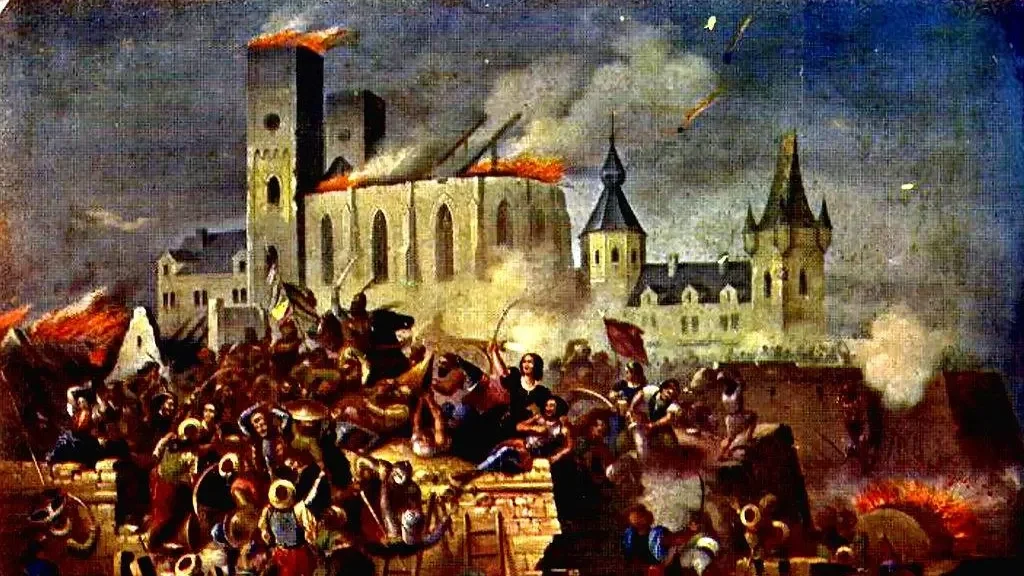 The Siege of Eger in 1552 (1860) - Béla Vízkelety - Wikimedia Commons
The fortress walls at Eger held barely two thousand defenders against an Ottoman army spread across the autumn countryside. For 39 days in 1552, István Dobó’s garrison faced bombardment from artillery that hurled marble cannonballs into the courtyard. When Ottoman miners tunneled beneath the walls, Gergely Bornemissza answered with improvised bombs and a gunpowder-laden mill wheel rolled into the enemy ranks. The Turks withdrew in October, leaving thousands dead. Hungary’s defenders had proven that Suleiman the Magnificent’s armies could be stopped.
Sebestyén Tinódi Lantos arrived at Eger that winter, walking through damaged fortifications where defenders showed him shattered walls and the ruined cathedral. He spoke with Dobó and the surviving vitézek (frontier warriors), gathering battlefield accounts while examining breaches where the fighting had raged. The minstrel set these firsthand testimonies to verse and music for transmission across the frontier, preserving military knowledge. His Eger vár viadaljáról való ének história (Song Chronicle of the Battle of Eger) describes the defense in detail. Defenders moved stones to repair breaches while women carried materials and poured boiling oil on attackers. Professional soldiers and townspeople fought together after swearing oaths before God to hold the fortress.
Szigetvár and the Death of Suleiman

The Battle of Szigetvár (1825) - Johann Peter Krafft - Wikimedia Commons
Fourteen years later, Szigetvár marked another stand in Christendom’s defense against Islamic expansion. Miklós Zrínyi commanded 2,300 Croatian and Hungarian soldiers of the kingdom against Suleiman’s final campaign. The castle stood on an island protected by marshland and the Almás stream. For 33 days, defenders repelled janissary waves while Ottoman siege guns reduced the outer fortifications. When supplies ran out and the walls crumbled, Zrínyi led his remaining troops in a desperate charge into the Ottoman camp. Both commanders died that September, Zrínyi in the final assault, Suleiman in his tent two days earlier. The siege delayed Ottoman advance for a century and prevented another march on Vienna.
After Mohács: A Divided Kingdom and a Fortress Frontier

The Discovery of the Corpse of King Louis II (1860) - Bertalan Székely - Hungarian National Gallery
The 1526 Battle of Mohács shattered the Kingdom of Hungary’s independence. II. Lajos, King of Hungary, died when his horse fell in the muddy Csele stream during the retreat. The kingdom fractured into three parts: Habsburg Royal Hungary in the northwest, Ottoman-controlled central plains after Buda’s capture in 1541, and the semi-autonomous Principality of Transylvania, which remained legally part of the Holy Crown while paying tribute to the Sultan. The Holy Crown of Hungary stood as the symbol of the kingdom’s legal continuity even in partition. Along the new frontiers, the végvárak (border fortress system) stretched two thousand kilometers from the Adriatic to the Carpathians. These border fortresses taught survival warfare. Garrison life in these fortifications meant sustained combat punctuated by brief ceasefires that meant little in the borderlands.
How the Wars Were Recorded
Miklós Istvánffy recorded these struggles with precision decades later in his history of Hungary. He had served as secretary to Miklós Oláh and knew many of the commanders personally, including time spent with the elder Zrínyi at Szigetvár before the 1566 siege. His accounts describe fortress architecture, supply systems, garrison composition, and tactical decisions that other sources overlook. When recounting Buda’s fall in 1541, he details how the city was seized. His description of Szigetvár’s final day draws on eyewitness reports and explains how the defenders planned their last sortie knowing no Habsburg reinforcements would arrive.
The garrison at Eger included six German master gunners hired for their technical skill, peasants who had fled there for protection, and women who carried materials and defended the breaches. Tinódi’s verses name officers and common soldiers, with István Mekcsey as Dobó’s deputy, István Hegedős commanding the infantry, and István Zoltay organizing supplies. His chronicle records that when some soldiers spoke of surrender in exchange for payment, Dobó had the conspirators executed on gallows raised in the courtyard. The defenders numbered nearly 2,000 troops against an Ottoman force that contemporary estimates placed at 40,000 men. The vitézek held their ground while the promised relief from Ferdinand never came.

Women of Eger (1867) - Bertalan Székely - Hungarian National Gallery
At Szigetvár, the defenders faced even greater odds. The fortress had three separate baileys linked by bridges, and attackers had to capture each section before reaching the inner castle. Zrínyi strengthened the defenses through the spring of 1566, deepening moats and stockpiling provisions. When the vizier offered vassal status and Croatian rule if he surrendered, Zrínyi refused. The final sortie on September 7 killed thousands before the last vitézek fell. Habsburg Emperor Maximilian II’s army remained encamped at Győr and never marched to relieve the siege.
A century later, the younger Miklós Zrínyi, a soldier, statesman, and commanding general who fought the Ottomans on the southern marches, composed Szigeti veszedelem (The Peril of Sziget) between 1645 and 1647. He wrote it to inspire Hungarians to renew the war against the Ottomans. He published the epic in fifteen cantos in 1651 as part of Adriai tengernek Syrenaia (The Siren of the Adriatic Sea). The work opens with an invocation to the Virgin Mary and appeared at a time when the Ottoman threat again loomed over Hungary. Zrínyi understood siege warfare from personal combat experience. His verses contain practical tactical knowledge applicable to fortress defense, including artillery placement, sortie timing, and ammunition calculations.
The Frontier System and Its Methods
The borderland system forged military expertise under constant pressure. Stone fortresses dominated river crossings and mountain passes. Riverside forests along waterways served defensive functions, with trees felled into rivers to block Ottoman cavalry movements. Smaller earthwork outposts watched the approaches. The végvári system (frontier fortress network) developed the hussar (huszár) light cavalry formation, a Hungarian military innovation born of border warfare that later became legendary across Europe. Intelligence networks gathered information deep inside Ottoman territory. Improvised engineering turned scarcity into a tactical advantage. Garrison commanders learned to use terrain, fortifications, and coordinated fire to defeat larger forces.

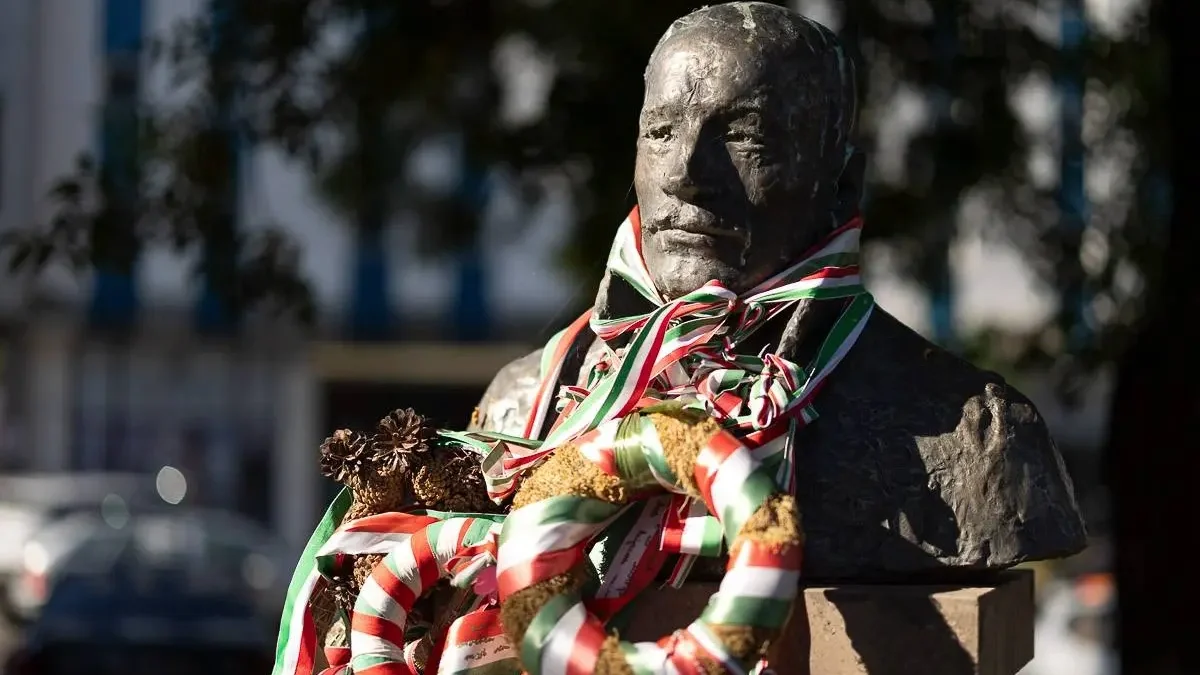
Végvári vitézek monument by Zsigmond Kisfaludi Strobl (1967) in Eger - Wikimedia Commons
Ottoman garrison records from the mid-sixteenth century show 20,000 troops holding the entire Hungarian occupation zone, a thin screen concentrated in key fortresses. The tripartite division created permanent war zones where formal peace still meant continued raiding. Defenders survived through adaptation, turning rivers, marshes, and forests into tactical advantages for outnumbered garrisons. These methods influenced European military thinking for generations.
The Human Cost and the Lasting Lessons
When the Holy League finally recaptured Buda in 1686 after 145 years, the siege required 75,000 troops, systematic trench works, and artillery positioned on Rózsadomb (Rose Hill in Buda) to breach the walls. Hungarian hussars under János Bottyán raided across the Alföld (Great Plain), preventing relief forces from reaching the city. Every tactical decision reflected frontier experience, from artillery placement to the coordination of infantry and cavalry attacks.

Mihály Dobozi and his Wife (1867) - Bertalan Székely - Hungarian National Gallery
The human cost extended beyond battlefield casualties. Hungarian villages stood empty, churches burned, families scattered or enslaved during 158 years of Ottoman occupation in central Hungary and constant frontier warfare. The population fell from roughly 3.5 million before Mohács to perhaps 2 million by the early eighteenth century, a civilizational catastrophe that nearly extinguished Hungarian culture on the central plains. The Treaty of Karlowitz formalized what the battlefields had decided. Ottoman forces withdrew from central Hungary. Hungarian resistance continued against Habsburg absolutism in Ferenc II Rákóczi’s War of Independence from 1703 to 1711, demonstrating that the determination forged in the végvárak (border fortresses) endured beyond formal liberation.
The fortresses at Eger and Szigetvár stand today as preserved battlefield museums. Stone walls show cannonball impacts, and underground passages once used by defenders connect the inner baileys. Ramparts preserve tactical knowledge in physical form, showing firing angles and defensive depth, and revealing where attackers would bunch under converging fire.
Hungary’s 158-year struggle with the Ottoman Empire produced military knowledge forged under constant pressure. Smaller garrisons learned that proper positioning and defensive advantages could offset enemy numbers. Intelligence networks reaching into Ottoman territory gave commanders advance warning. Improvised weapons filled gaps when conventional supplies ran short. Heavy casualties could be inflicted on attackers through coordinated fire from fortified positions. The battlefield chronicles of Sebestyén Tinódi Lantos, the epic poetry of Miklós Zrínyi, and the histories of Miklós Istvánffy preserved these hard lessons for future generations of Hungarian fighters who would face superior forces without reliable allies.
Sources:
Tinódi Lantos Sebestyén (1554) - "Eger vár viadaljáról való ének história" and “Egri históriának summája”
Zrínyi Miklós (1647-1651) - "Szigeti veszedelem" (Obsidionis Szigetianae)
Istvánffy Miklós (1538-1615) - Historical works on Hungary and the Ottoman wars
Magyar Nemzeti Levéltár (Hungarian National Archives) - Documentary sources on the 1552 siege
Academia.edu - Historical studies on Tinódi, Zrínyi, and Istvánffy
hungarianottomanwars.com - Digital archive of Hungarian fortress histories
Related:
Az X- és Telegram-csatornáinkra feliratkozva egyetlen hírről sem maradsz le!





Mi a munkánkkal háláljuk meg a megtisztelő figyelmüket és támogatásukat. A Magyarjelen.hu (Magyar Jelen) sem a kormánytól, sem a balliberális, nyíltan globalista ellenzéktől nem függ, ezért mindkét oldalról őszintén tud írni, hírt közölni, oknyomozni, igazságot feltárni.
Támogatás