What Might Have Been Behind Fidesz's Defeat?
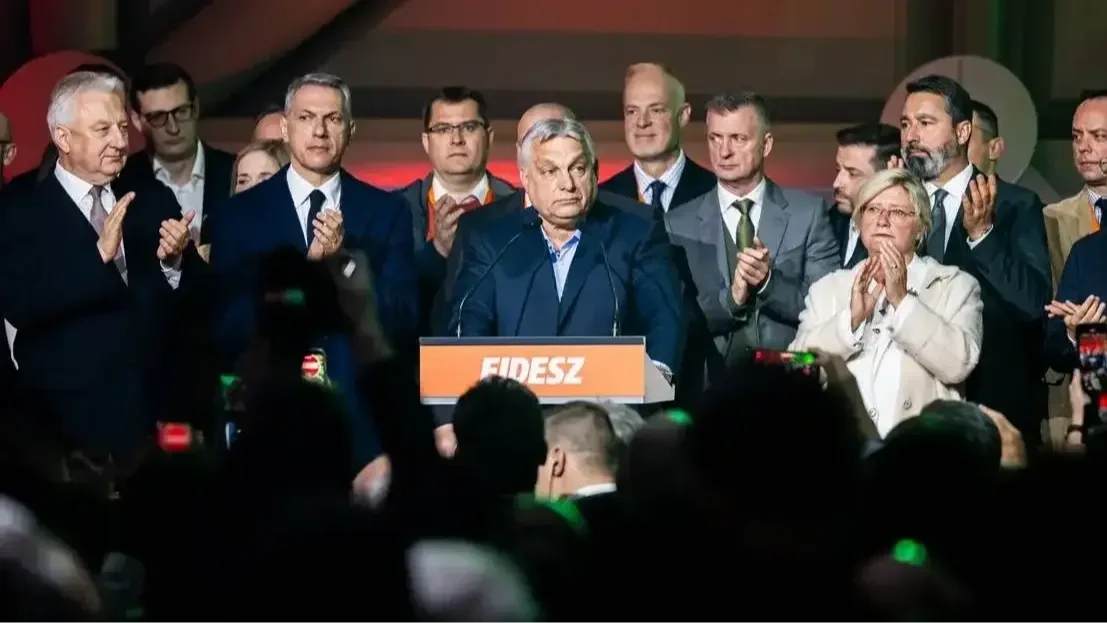 Image: Bence Tövissi - Index
Translation of an article originally published in Hungarian by Magyar Jelen on April 13, 2026. This piece, summarizes and quotes from a column by Gábor Balogh that appeared in Index.
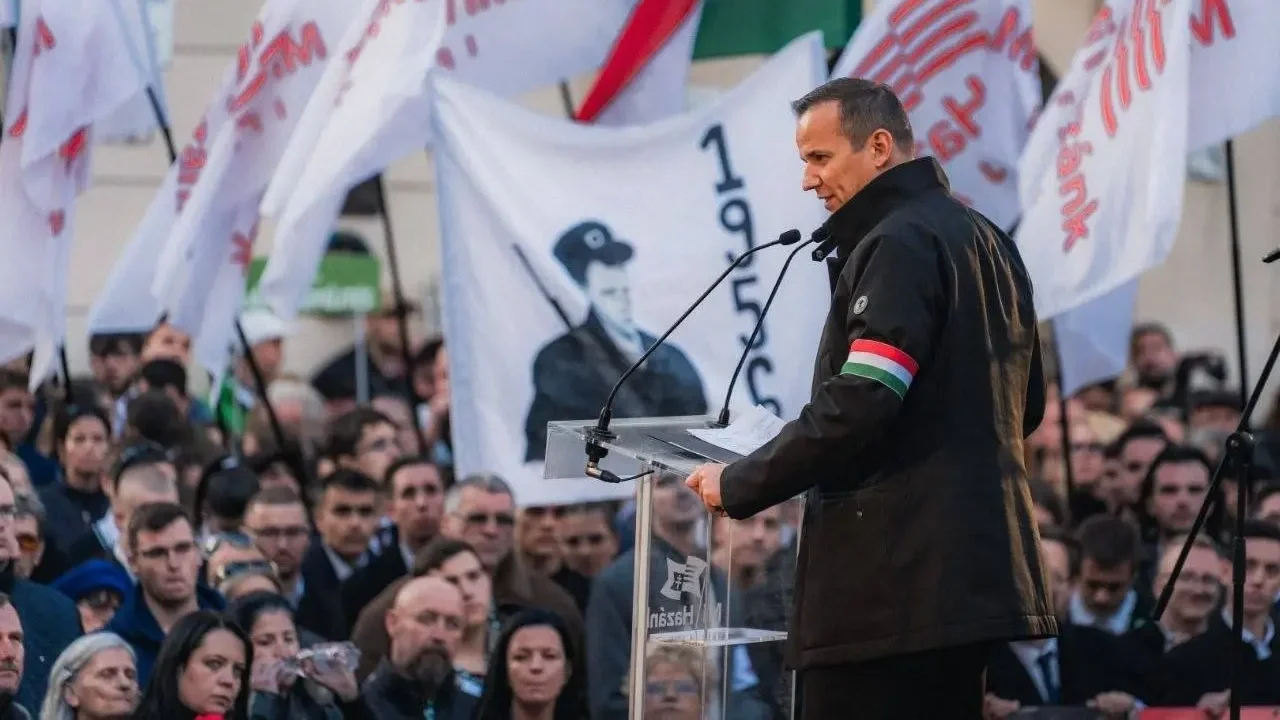
At Friday's all-party talks in Parliament, the parties agreed, on a proposal by Mi Hazánk (Our Homeland Movement), that the swearing-in of incoming members of parliament would take place before the Hungarian Holy Crown, and that the Székely Anthem would also be sung at the ceremony. No one raised a single objection. Columnist Gábor Balogh shared his thoughts in the pages of Index on how this came to pass.
According to a contributor at Öt, in the days leading up to and during these talks, a number of far more important practical matters were also being discussed. But by any historical measure, this was likely the most important moment of all.
"Imagine proposing this at Parliament's inaugural session in 2002. It probably wouldn't have even come up, and if some hardcore right-winger from the KDNP (The Christian Democratic People's Party) had floated it, even most Fidesz lawmakers wouldn't have backed it. Now it passes without a single objection," he wrote, recalling that when the first Orbán government moved the Holy Crown to the Parliament building on New Year's Day 2000, the popular satirical TV show Heti Hetes, along with half the country, laughed the whole thing off. In any crowd that was even slightly non-Fidesz, you could always get a laugh by saying Viktor had moved the crown over so he could sneak out and try it on.
Balogh notes that on that same New Year's Eve, the Székely Anthem was sung by a far smaller crowd than today. Most people had merely heard of it. In the influential circles that set the intellectual tone, sneering at it as "kitschy, sentimental tune" was considered the respectable thing to do.
"Now, in April 2026, the Holy Crown, as the symbolic pillar of legitimacy for a newly elected government grounded in popular sovereignty, and the Székely Anthem, now ranked virtually alongside the works of Erkel and Kölcsey as a second national prayer, are not merely uncontroversial. They are self-evident," the columnist declares.
What Matters Is the Trend
Of all the shifts of the past quarter-century, Balogh considers one the most consequential: the broad rightward turn in Hungarian public opinion. What was sharply rejected or openly mocked twenty to twenty-five years ago has often become the lowest common denominator today. What was once on the margins has moved to the mainstream. This is largely the result, alongside Jobbik, of the policies Fidesz pursued first in opposition and then in sixteen years of government. They won a victory of historic proportions. They just didn't recognize it as such, and that failure played a significant role in their own defeat. By the end, the party that had done the most to drive this transformation understood it the least.
Fidesz has long referred to itself as the "national camp," and continued to do so throughout the campaign and afterward. Viktor Orbán used the phrase in his most recent interview.
In Balogh's view, this is one of the greatest errors of Orbán's career and one of the central causes of his defeat. Among the most significant roots of this failure was a serious misreading of the public mood.
"The Fidesz-aligned think tanks have already offered several explanations for this. If we assume they weren't deliberately lying, to the public or even to their own clients (and absent clear evidence otherwise, that must be our starting point), then they got it badly wrong. Dániel Deák offered one possible answer on Partizán. A favorite influencer-analyst in the Fidesz orbit explained it: in their surveys, respondents who agreed with the most important elements of the government's messaging and self-image were classified as Fidesz voters. And you'd be hard pressed to find a bigger blunder than that," Balogh writes.
According to Balogh, a great many people who ended up voting against Fidesz, or, more tellingly, straight for Tisza, nonetheless support curbing mass migration, staying out of the war in Ukraine, opposing Kiev's EU membership bid and Brussels' Ukraine policy more broadly, criticizing the EU in general terms, the family support system, and assistance to ethnic Hungarians living beyond Hungary's borders.
The Öt contributor argues that these are unquestionably conservative, patriotic, and pro-sovereignty positions, the very pillars of the "national camp." The trouble is that this "national camp" reaches well beyond the circle of Orbán's supporters: partly because Fidesz alienated large swaths of right-leaning voters, and partly because over the past ten to fifteen years many people have become fundamentally right-of-center, even when they don't consciously frame it that way. Some became Fidesz voters in the process, but many did not.
Orbán's Inner Circle Was Deaf and Blind to the Change
"The vast majority of the government's inner circle, analysts included, was completely deaf and blind to this shift," Balogh writes, adding that the situation was compounded by two mistakes that no one in public life can afford to make: they came to believe their own messaging. Then they assumed everyone else did too.
They hammered the stock epithet "left-wing opposition" so relentlessly that they eventually came to see Tisza as purely leftist and liberal. What's more, they were convinced the entire country shared that view. And if everyone thinks Magyar Péter's party is left-wing, then obviously no right-leaning voter will cast a ballot for them.
"What Fidesz politicians, advisors, and analysts should have grasped is how ordinary people actually saw Tisza, or saw Fidesz itself, for that matter, and their own country, and the world beyond it," he writes, concluding that Fidesz and its orbit failed precisely on this count, above all because they had grown accustomed to the idea that the coordinate system they had drawn would be taken up by the broad majority of society, who would then find their own place inside it. If in their reality the opposition was "left-wing," then left-wingers would vote for it and everyone else would not.
In Balogh's view, a large part of Hungarian society has walked out of the Fidesz universe, whose architects could no longer see past its walls—a universe that no longer encompassed the country but had walled them off from its people.
The Consensus Has Shifted
The analysis concludes that the left-liberal consensus of the 1990s appears to have been replaced by a conservative-national one. And just as that earlier consensus was never exclusively Fidesz's to claim, neither is the new one Tisza's. The parties will have to share it.
"If they don't change their failing approach, there will be two big losers in this new landscape: Fidesz, which still doesn't understand that this consensus reaches well beyond its own base, and the left-liberal intellectual class, which has been shut out of the new consensus entirely," Balogh declares.
"I genuinely understand, and honestly partly share, the smug satisfaction of those who watch the progressive uproar over the would-be new education minister with a knowing smile. But that uproar is actually a sign that they are at least beginning to understand what they've been getting wrong all along. The former prime minister and his colleagues' public statements, on the other hand, suggest they have yet to face even that bitter reckoning," he concludes.
Notes
The Székely Anthem: A hymn deeply associated with the Székely people, ethnic Hungarians native to the Transylvania region of present-day Romania. Long treated as a cultural anthem of all ethnic Hungarians living outside Hungary's borders, it has gained broad recognition in Hungary as a symbol of Hungarian unity.
Heti Hetes: A long-running Friday night satirical television program featuring a panel format. In the late 1990s and 2000s, it was a highly influential show that often reflected mainstream urban, liberal-leaning opinion in Hungary.
Erkel and Kölcsey: Ferenc Erkel (1810–1893) composed the music for Hungary's national anthem, the Himnusz. Ferenc Kölcsey (1790–1838) wrote its lyrics. Together they are the foundational figures of Hungary's national patriotic musical heritage.
Partizán: A Hungarian online political interview and commentary channel with a sizable following, known for long-form discussions with public figures, often viewed from the right as an extreme left activist platform. Its name evokes partisan traditions historically associated with far-left anarchist movements.
Az X- és Telegram-csatornáinkra feliratkozva egyetlen hírről sem maradsz le!


Mi a munkánkkal háláljuk meg a megtisztelő figyelmüket és támogatásukat. A Magyarjelen.hu (Magyar Jelen) sem a kormánytól, sem a balliberális, nyíltan globalista ellenzéktől nem függ, ezért mindkét oldalról őszintén tud írni, hírt közölni, oknyomozni, igazságot feltárni.
Támogatás