Hungary's April 12 Election: Three Parties, No Clear Front-Runner, and the Polls Nobody Trusts
 "Steady calm against a surge of rage" - an AI illustration of Viktor Orbán, Péter Magyar, László Toroczkai
On April 12, roughly 7.6 million registered Hungarian voters will decide the composition of a new 199-seat parliament (Országgyűlés). Three party leaders are at the top of the ballot.
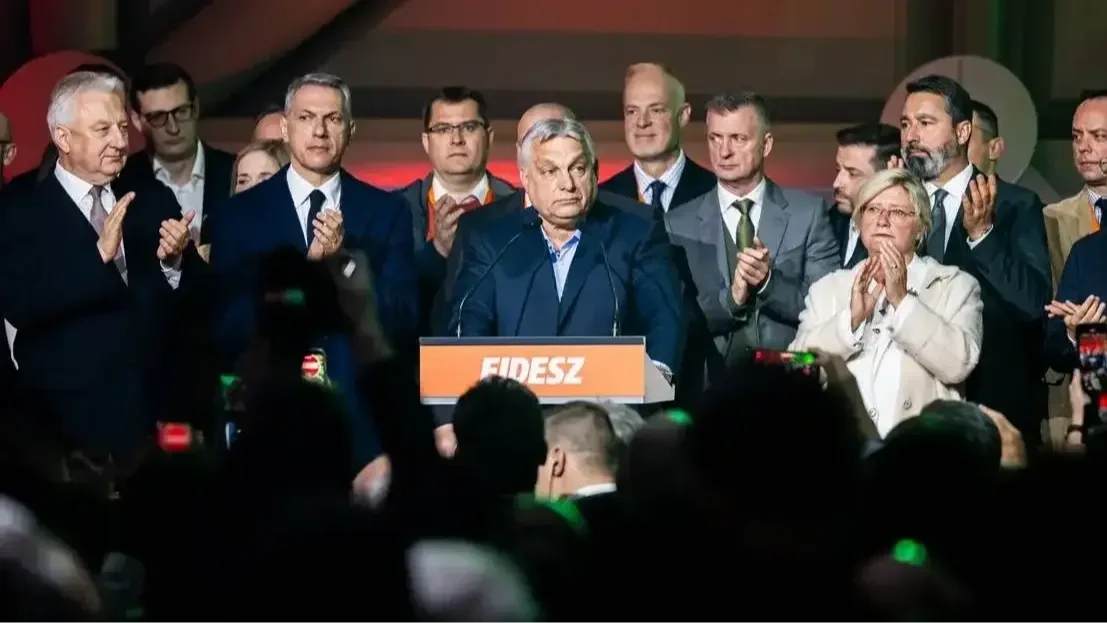
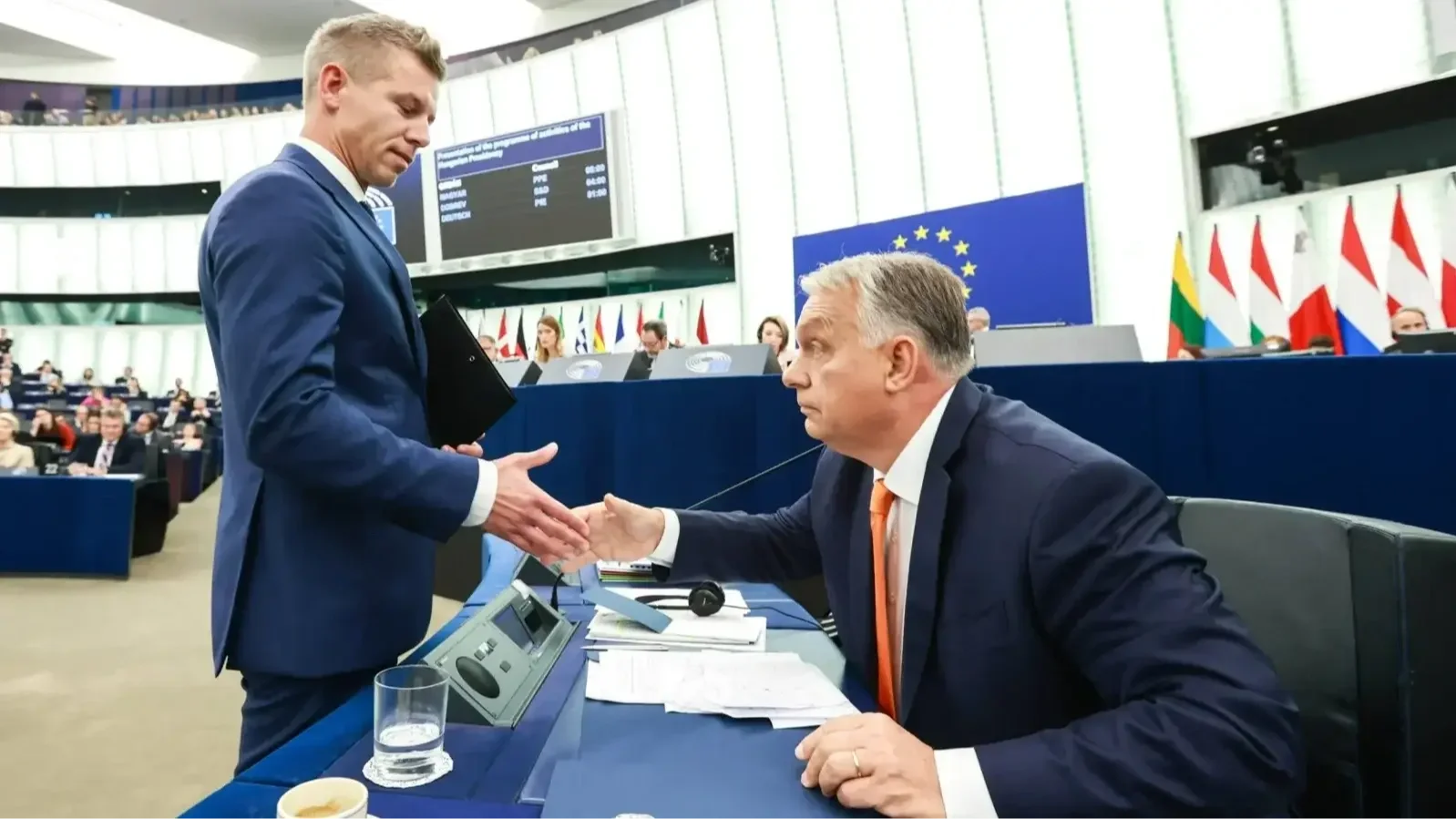
Viktor Orbán has governed Hungary since 2010 through his Fidesz–KDNP alliance. It has been sixteen years marked by corruption scandals and a narrowing circle of power that has cost him pieces of his own patriotic base. His government pushed large-scale foreign investment projects, from Asian battery plants to Western automotive factories, without taking the needs of local communities into consideration. Separately, it flooded the labor market with guest workers while young Hungarians left the country. State resources were concentrated among a shrinking circle of political allies and personal cronies.
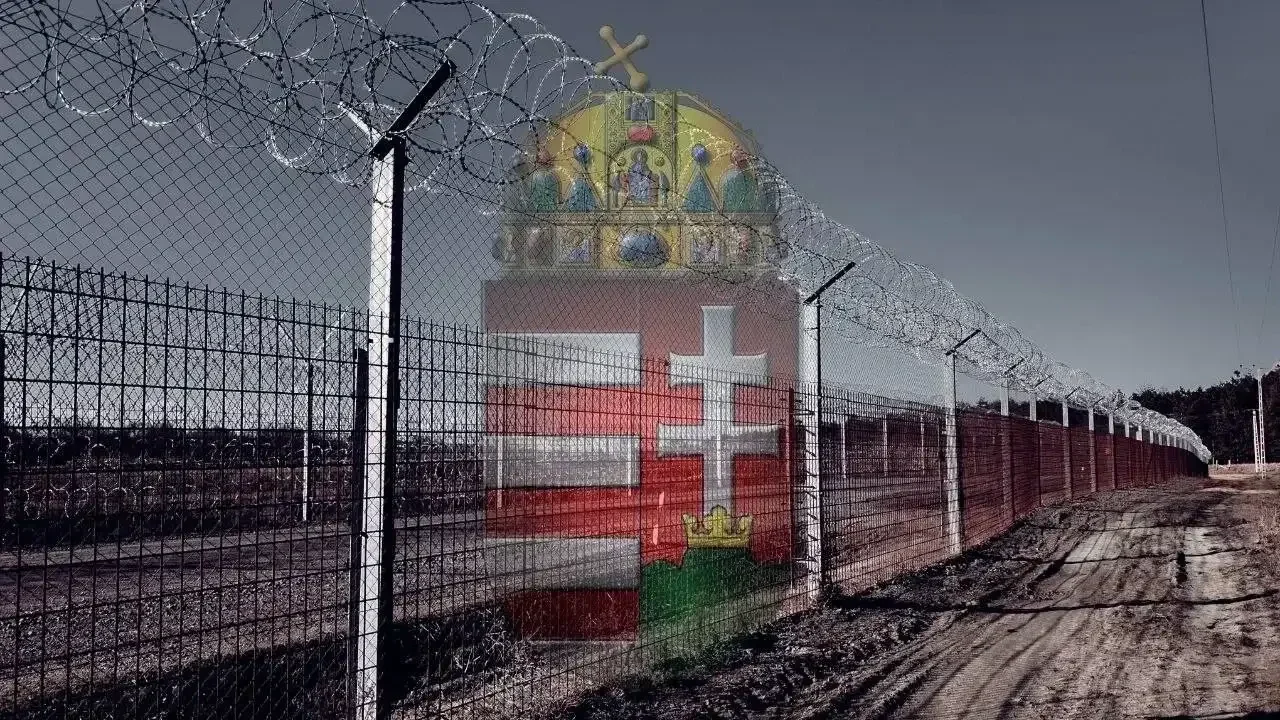
By 2026, a growing number of patriotic voters no longer see Fidesz as the party that built the border fence, but as the party that forgot why it was built.
Then there is Péter Magyar, the former Fidesz insider whose ex-wife, Judit Varga, served as justice minister during the presidential pardon scandal. In February 2024, it emerged that President Katalin Novák had pardoned an accomplice in covering up child sexual abuse at a children's home. Both Novák and Varga, who had countersigned the pardon, resigned.
Magyar moved quickly. In an act of raw political opportunism, he released private recordings of his own ex-wife that implicated her in yet another Fidesz corruption scandal, the Schadl–Völner bailiff bribery case.
He then gave an interview on extreme-left YouTube channel Partizán that drew over a million views within days. That scandal launched Magyar's political career. But the man now promising to clean house spent years living inside it, benefiting from the same patronage networks, political connections, and privileges he now campaigns against.
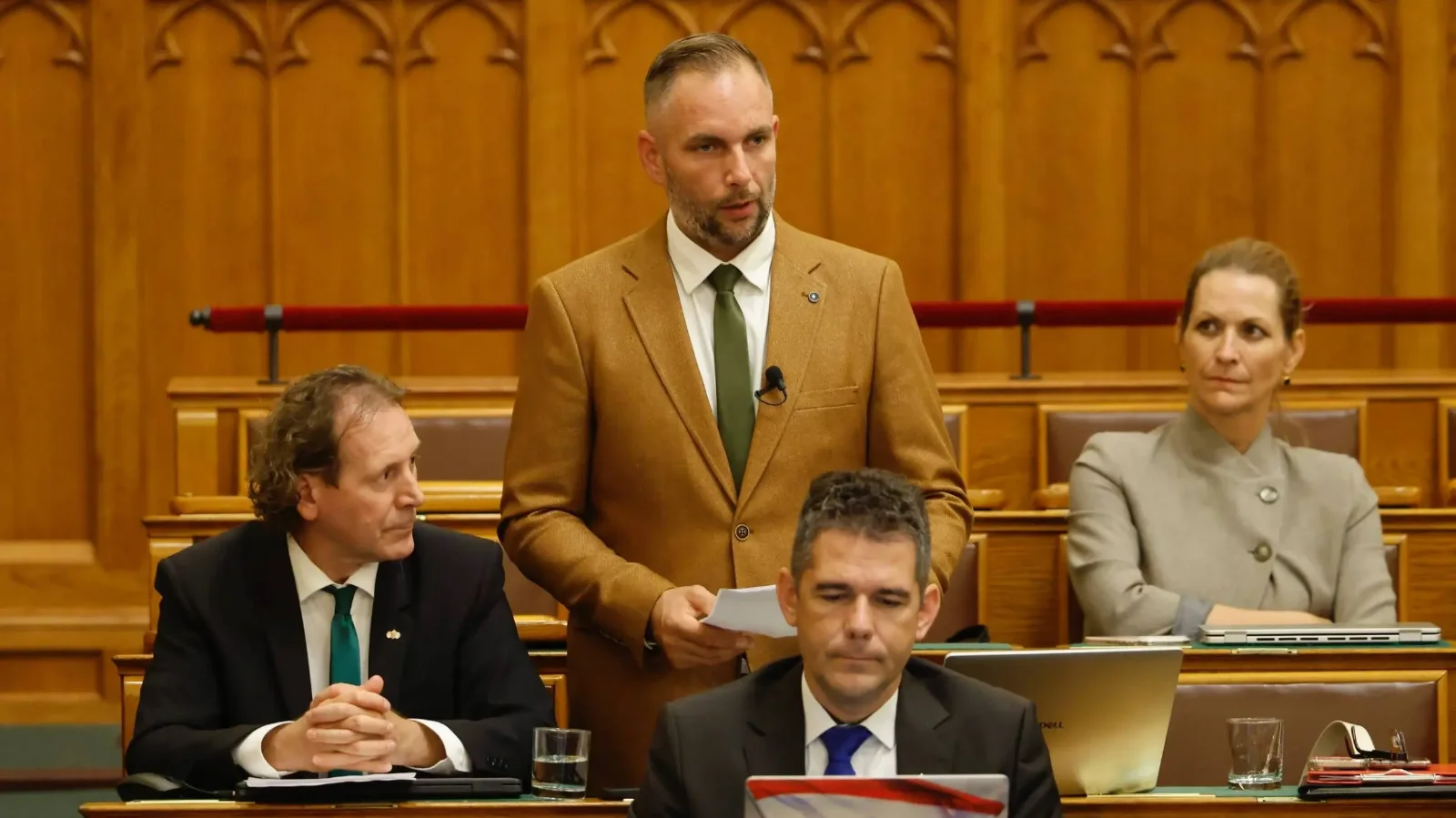
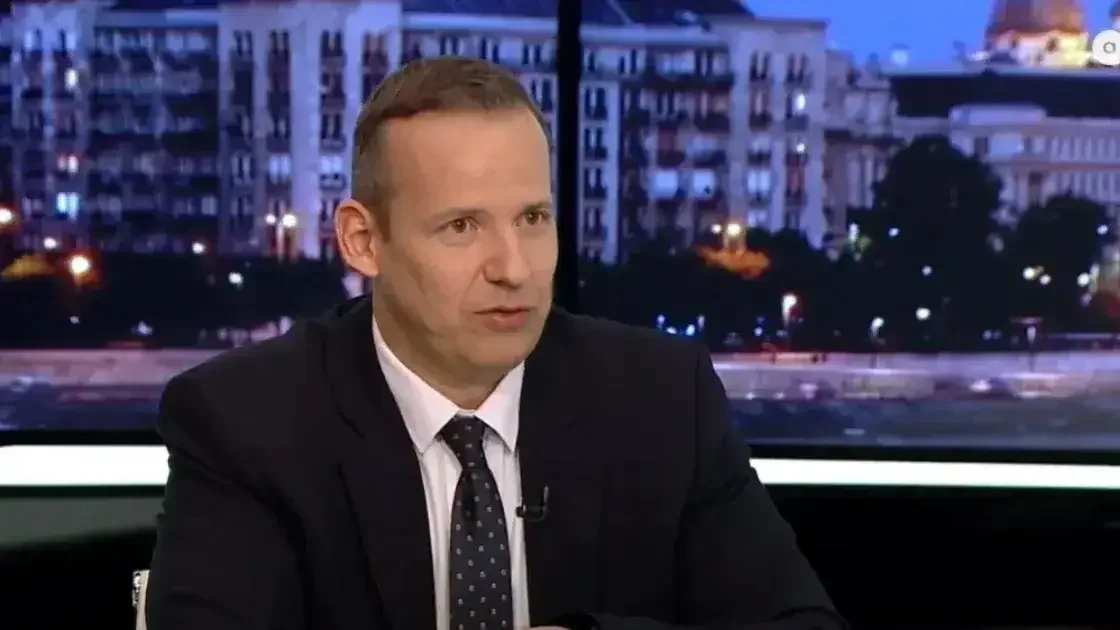
And László Toroczkai, chairman of Mi Hazánk Mozgalom (Our Homeland Movement) and the party's candidate for prime minister, was mayor of Ásotthalom, where he called for the southern border fence in early 2015. At the time, Fidesz did not take the migrant crisis seriously and mocked Toroczkai's warnings. Months later, with migrants streaming across the southern border, the government hastily built the fence and claimed the credit.
Mi Hazánk has been fighting bailiff corruption, in particular the Schadl–Völner bailiff bribery case, since the party's founding in 2018, years before Magyar made it a headline.
Toroczkai told Index in February 2026 that he coined the term "végrehajtó maffia" (bailiff mafia) himself and has confronted Orbán with it repeatedly on the floor of parliament.
Mi Hazánk supporters know the pattern. Both Fidesz and Tisza adopt the party's ideas, but strip them down in the process.
The border fence got built, but the broader migration policy Mi Hazánk proposed never followed. Tisza now talks about reforming the bailiff system, but stops short of the full nonprofit overhaul Mi Hazánk has demanded for years. Mi Hazánk has made clear it would support these policies if they were implemented as originally proposed. Until then, the party sees no reason to hand either Fidesz or Tisza a blank check.
These three candidates will compete under an electoral system that rewards organizational reach as much as popular support.
Of the 199 seats, 106 are filled through single-member constituencies, where the candidate with the most votes wins outright. The remaining 93 come from national party lists, divided proportionally, with a 5 percent threshold. Surplus and losing votes from constituency races feed back into list seat calculations, a mechanism that tends to reward whichever party wins the most districts.
Mi Hazánk collected the required endorsements in all 106 constituencies and submitted its national list in the first week of the signature period, ahead of its own 2022 pace. No other party came close. The Democratic Coalition (DK), the left-liberal party of disgraced former prime minister Ferenc Gyurcsány, polls around 2–2.5 percent. The Hungarian Two-Tailed Dog Party (MKKP), an anarchist formation disguised as a so-called "satirical party," sits at similar levels. Both face long odds getting into parliament.
Mi Hazánk, measured between 5 and 8 percent depending on the institute, is the only party outside Fidesz and Tisza with a realistic shot at entering the next parliament. Those close to the party's campaign believe the real number could easily exceed 10 percent, pointing to overflowing rally halls and a consistent history of outperforming every published poll.
The polls tell one story. The results tell another. In 2022, Mi Hazánk consistently polled below the 5 percent parliamentary threshold and finished at 5.88 percent, entering parliament for the first time, a result no poll predicted. In the 2024 European Parliament election, the party again outperformed, reaching 6.74 percent. That's twice now. The numbers being published likely understate real support. The pro-government Nézőpont Institute, one of only three Hungarian polling firms close to accurate in 2022, currently measures Mi Hazánk at 8 percent.
Toroczkai has been blunt, telling reporters at Index that the polls are manipulated based on who's paying for them.
Magyar Jelen reported in January 2026 that Toroczkai called for fabricated polling to be classified as a criminal offense against the electoral process.
Mi Hazánk supporters have watched the party outperform every pre-election poll since its founding. Their sentiment is blunt. These polls and this framing amount to a blatant psyop, designed to gaslight and emotionally charge voters into believing their preferred party has no viable path.
In Hungary, Facebook is not one platform among many. It is the dominant tool for political organizing, campaigning, and voter outreach, with over five million active users in a country of fewer than ten million. Its user base skews older, toward the voters most likely to show up on election day. Being banned from Facebook in a Hungarian election is not a social media inconvenience. It is a political death sentence.
Toroczkai has been personally banned from Facebook since May 2019, when Meta designated him a "dangerous person" and deleted his page ahead of that year's European Parliament elections. He sued Meta. The case reached Hungary's highest court, the Kúria, which ruled that Meta was entitled to remove the Facebook page. But the court also found that the separate deletion of his Instagram account violated his right to maintain an online presence, and ordered Meta to restore the account. It refused, citing "technical reasons." When Toroczkai briefly re-registered on Facebook in late 2024, the page was deleted again after eight days. He has announced in parliament that he will challenge the 2026 election result over the platform ban, stating that "there are no free elections in Hungary as long as we do not end this scandalous situation."
The five million active Hungarian users on Facebook, who skew towards the voters most likely to show up on election day… Toroczkai cannot reach them. He was not the only target. In March, Meta deleted the Facebook page of Bűnvadászok (Crime Hunters), a Mi Hazánk-affiliated civic initiative with 167,000 followers, in the final weeks of the campaign. Toroczkai called it direct manipulation of Hungarian elections. He compared it to the 2024 Romanian presidential election annulment, in which a court voided the first-round result over alleged social media manipulation.
Even so, Toroczkai's national tour, what Hungarians call an országjárás, has drawn crowds that overflow community halls.
As he told Index upon submitting the party's national list, "the biggest problem during our national tour is that people cannot fit into the cultural houses where we organize our events."
Mi Hazánk is running candidates in all 106 constituencies, a feat no party besides Fidesz and Tisza matched. Toroczkai runs in the Szeged-area Csongrád-Csanád County 2 district where he built his political base. Deputy leader Dóra Dúró, co-founder of the party and vice president of parliament, is running in Tolna County 2 (Dombóvár), where she grew up and her family still lives. All candidates have pledged they won't hide behind parliamentary immunity or step aside for another party's nominee.
Fidesz retains deep organizational infrastructure in rural Hungary. Tisza will pick up urban and suburban districts, including several redrawn Budapest seats. But Mi Hazánk's ground-level presence, built without Facebook, without legacy media access, and without state funding on the scale of either major party, is the story most coverage ignores.
No matter how the seats fall, the coalition question won't go away, and Mi Hazánk's answer hasn't changed. The party's official website carries the banner, "Senkivel nem fogunk koalíciót kialakítani!" which translates to "We will not form a coalition with anyone!"
Toroczkai expanded on this at an InfoRádió Aréna interview in early April, explaining that his party's goal is to function as the king-maker, forcing the next parliament to adopt elements of the Virradat 2.0 program.
Virradat, which translates to "Dawn," is Mi Hazánk's detailed governing program, covering areas as wide-ranging as economic sovereignty, national defense, and rural development. Neither Fidesz nor Tisza has published anything comparable in scope or specificity.
The proposals include a Polish-style immediate VAT reduction on fuel. Zero tolerance on guest workers. Early retirement protections for night-shift workers. Re-establishment of the Hungarian Border Guard as a standalone agency. Prioritizing Hungarian small and medium businesses over multinational corporations. A dedicated anti-corruption prosecutor's office independent of the government. And the abolition of parliamentary immunity, a pledge every Mi Hazánk candidate has already made personally.
Neither Fidesz nor Tisza looks likely to reach the 100-seat majority on its own. If that holds, Mi Hazánk decides who governs, not through coalition, but by voting with each side depending on the issue. "There are things Tisza will vote for with us, and things Fidesz will vote for with us," Toroczkai told Index in February. “I think this is the best thing for Hungary and for Hungarians, if politics and parliament work this way.”
Sources:
Magyar Jelen (magyarjelen.hu) — Toroczkai on poll manipulation (Jan. 15, 2026); Meta censorship coverage (Mar. 7 & Mar. 12, 2026)
Index (index.hu) — Mi Hazánk list submission and endorsements (Feb. 27, 2026); Toroczkai on coalition and policy (Feb. 13, 2026); Meta page deletion (Dec. 10, 2024)
InfoRádió (infostart.hu) — Toroczkai Aréna interview (Apr. 2, 2026)
Telex (telex.hu) — Facebook reinstatement and deletion (Dec. 10, 2024); Notable constituency candidates (Mar. 6, 2026)
Hungarian Conservative (hungarianconservative.com) — Toroczkai parliamentary announcement on election challenge (Oct. 6, 2025)
Columbia University Global Freedom of Expression — László Toroczkai v. Meta, Kúria case summary
Mi Hazánk Mozgalom (mihazank.hu) — Virradat program 2.0; Candidate profiles
European Parliament (results.elections.europa.eu) — 2024 EP election results, Hungary
Nemzeti Választási Iroda (National Election Office) — vtr.valasztas.hu/ogy2026
Related:


Mi a munkánkkal háláljuk meg a megtisztelő figyelmüket és támogatásukat. A Magyarjelen.hu (Magyar Jelen) sem a kormánytól, sem a balliberális, nyíltan globalista ellenzéktől nem függ, ezért mindkét oldalról őszintén tud írni, hírt közölni, oknyomozni, igazságot feltárni.
Támogatás