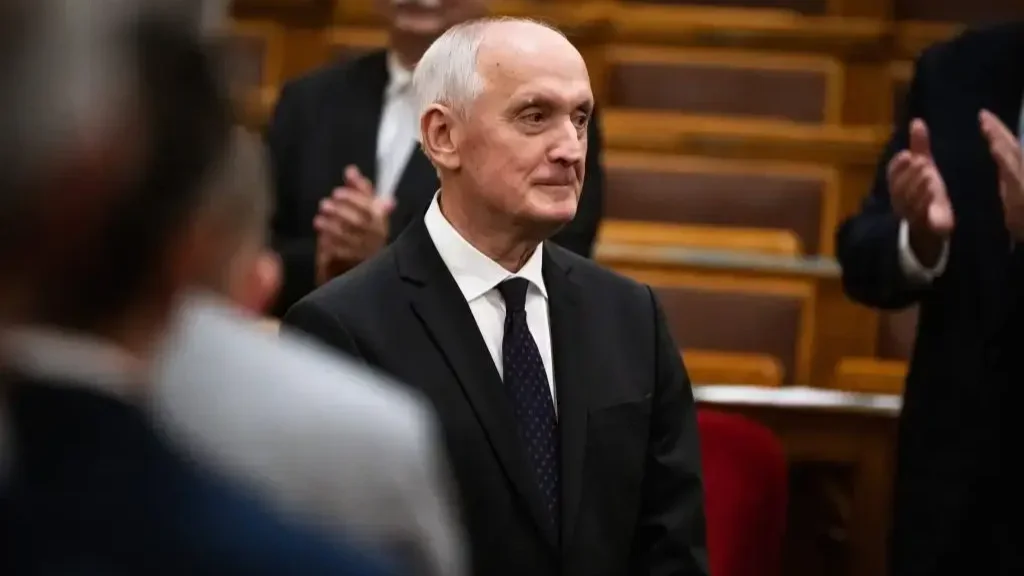
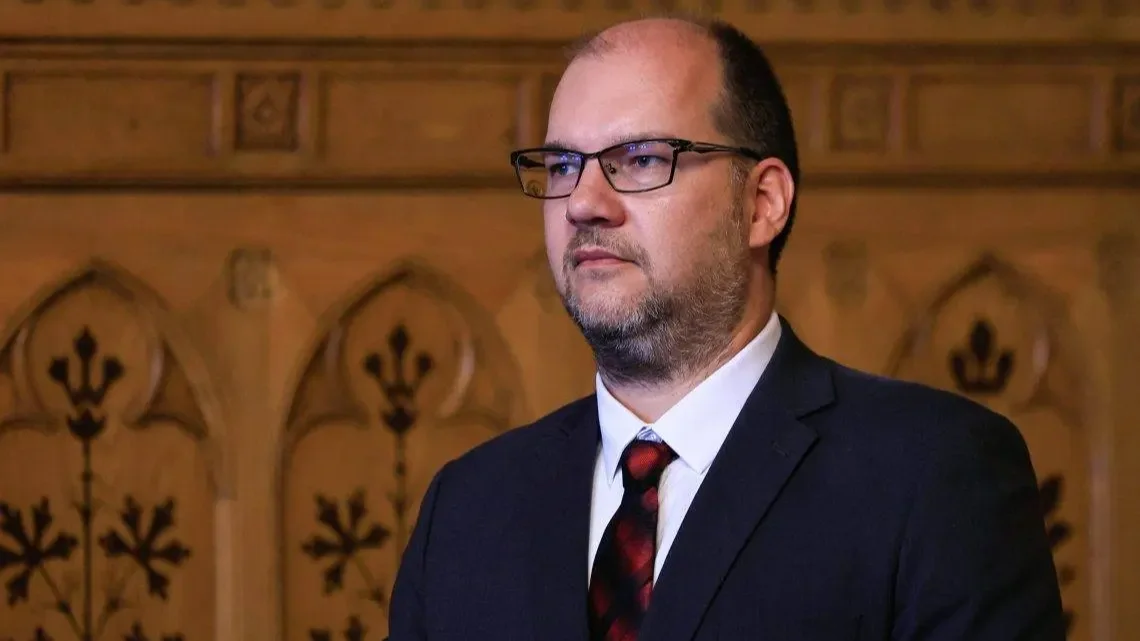
Theater of Operations: Hungary, Spring 2026
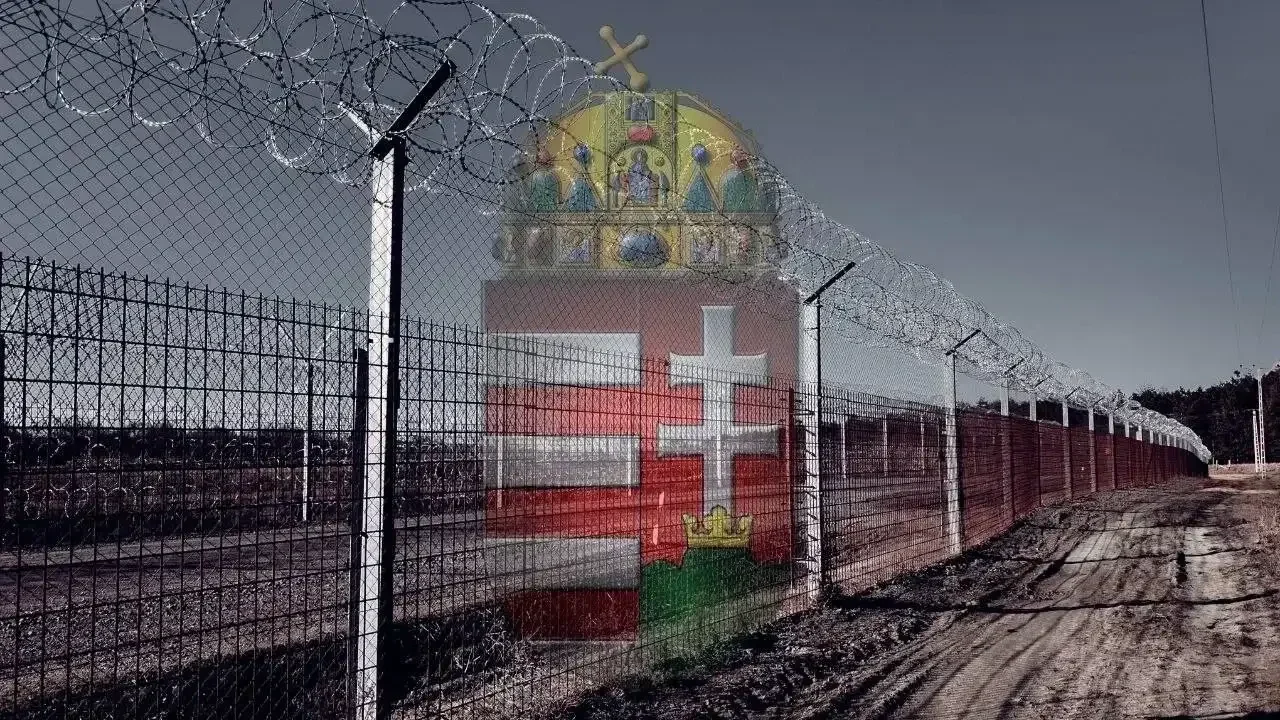 Photo composite: Tamás Lipták / Magyar Jelen
Translation of an article originally published in Hungarian by Magyar Jelen on May 1, 2026 by Tamás Lipták.
The events of the 2026 Hungarian election campaign may one day serve as the basis for an excellent spy film. Before that day comes, however, many unknown players and incidents will still need to come to light, none of which I am in a position to reveal, lacking intelligence connections. Nor is that the purpose of this article. László Toroczkai, president of Mi Hazánk (Our Homeland Movement), has identified the investigation of foreign interference during the 2026 campaign as one of the most important tasks now that his party has taken over the chairmanship of Hungary's National Security Committee. It would indeed be difficult to argue that no such interference took place. Since publicly available information remains extremely limited, I will trace the known episodes of this influence attempt based solely on what has already appeared in the press. One thing must be made clear. This article is not an assessment of the election results, and, Dear Reader, you should not expect one.
It comes as no great surprise that the full story of the Hungarian operation, its participants, its starting point, and its precise course, will remain unknown for some time. Nevertheless, I believe it is possible to construct a timeline and chain of events that, taken together, outline the operation's major milestones and its objective, at least as much as has received any press coverage at all. These are the events worth meaningfully engaging with, sketching out some kind of picture of how sixteen years of NER rule was toppled in Hungary, presumably with the assistance of foreign, most likely European, intelligence services.
(The NER, or Nemzeti Együttműködés Rendszere, meaning "System of National Cooperation," is the term Viktor Orbán used for the political and economic order his government built over its successive terms in power.)
Guerrilla War Against Soros
Nearly a decade ago, during the 2018 election campaign, Fidesz, Hungary's ruling party under Viktor Orbán, trained its fire on the NGOs financed by George Soros. These non-governmental organizations are not merely present in Europe; they actively shape culture, influence media, and determine and set the agenda for public debate. Around the same time, both Orbán and his party began to sour on the European Union. Whether Russian influence played any role in that rupture is unclear, but cannot be ruled out given what we currently know. A defining moment in this process came when Fidesz left the European People's Party parliamentary group. (Its junior coalition partner, the KDNP, the Christian Democratic People's Party, remained within the EPP family at that point.)
Around the same time, certain Hungarian media outlets began appearing, or their direct forerunners did, and after 2020 these were openly funded, to varying degrees, by the Biden administration and various organs of what is commonly called the deep state, through their programs.
Among these outlets were Partizán, the signature outlet of far-left activist Márton Gulyás, and Telex, founded in the fall of 2020 by journalists who had left Index after that outlet came into the orbit of Antal Rogán's business interests.
In the years that followed, these left-wing platforms gained staggering influence over public discourse, facilitated by the enormous budgets they assembled, at least on paper, from small-dollar donations and the one-percent income-tax designation program, under which Hungarian taxpayers can direct one percent of their income taxes to a nonprofit of their choosing. Many believe, however, that the real driver of their extraordinary growth was foreign funding channeled from the United States to their very large editorial staffs. Building this left-wing media network was essential to seizing control of the national conversation.
The pardons affair, real and outrageous as it was, and the "Uncle Zsolt" campaign (a narrative that, based on what is currently known, appears to be false in the form it became public, involving allegations tied to a figure with that nickname and deployed as political ammunition during the election) can each be understood, in retrospect, as a kind of dress rehearsal for the system that had been built up, even if not every actor in them knew that was their role. This is perhaps also suggested by the fact that while "Uncle Zsolt" exists as a political phenomenon, we may never come to know him as a concrete political figure. Apparently, that was never the point of the whole affair.
(The pardons affair refers to the controversy over a presidential pardon granted in a case involving the sexual abuse of children, which triggered widespread public outrage and ultimately forced the resignation of Hungary's then-president.)
The Intelligence Services in Action
Three operations linked to Hungary's domestic intelligence services came to light during the campaign. The first centered on the website radnaimark.hu (since taken down), which raised the question of whether Péter Magyar, then a Member of the European Parliament for the Tisza Party, had been placed under illegal surveillance. While the site remained live, it displayed a single image, a bedroom photograph taken from the viewpoint of a hidden camera. Magyar acknowledged he had indeed been in that room with Evelin Vogel, but claimed he had been lured there as part of an intelligence operation. He identified a white powder visible on a tray in the photograph as "suspected narcotics," which, he said, neither of them touched during their time there.
To this day, no one knows who was behind the website or the photograph posted on it. After the election, the site simply disappeared, without publishing any substantive information or the evidence it had promised.
Then came Bence Szabó, an investigator with Hungary's National Investigative Office (NNI), who appeared first at the Direkt36 investigative outlet and then in the studio of Partizán. He claimed to have taken part in an undercover operation where, to his knowledge, search warrants had to be executed against two IT specialists known by the handles "Gundalf" and "Buddha" on suspicion of producing and storing child pornography. It later emerged that both men also happened to work on Tisza Party IT platforms.
Hungary's Constitution Protection Office, the country's domestic counterintelligence service, subsequently confirmed credibly that the two IT specialists had come to the attention of Hungarian intelligence after the outbreak of the Russia-Ukraine war, and before Péter Magyar's "awakening," that is, before his rejection of Lőrinc Mészáros. Officially, then, their surveillance had nothing to do with the Tisza Party. Left-wing media outlets, however, went on to frame the episode as though the searches had been conducted solely because of the men's work for the political opposition.
That is indeed an interesting question. Why did the NNI's unit for crimes against children need to be brought into the case at all, and what purpose did the transparently false pedophilia angle serve in the investigation? After all, a charge of espionage alone would have been sufficient to justify an arrest and every investigative step that followed. And had the goal been to raise suspicion of pedophilia around the Tisza Party, some means would presumably have been found to make it stick.
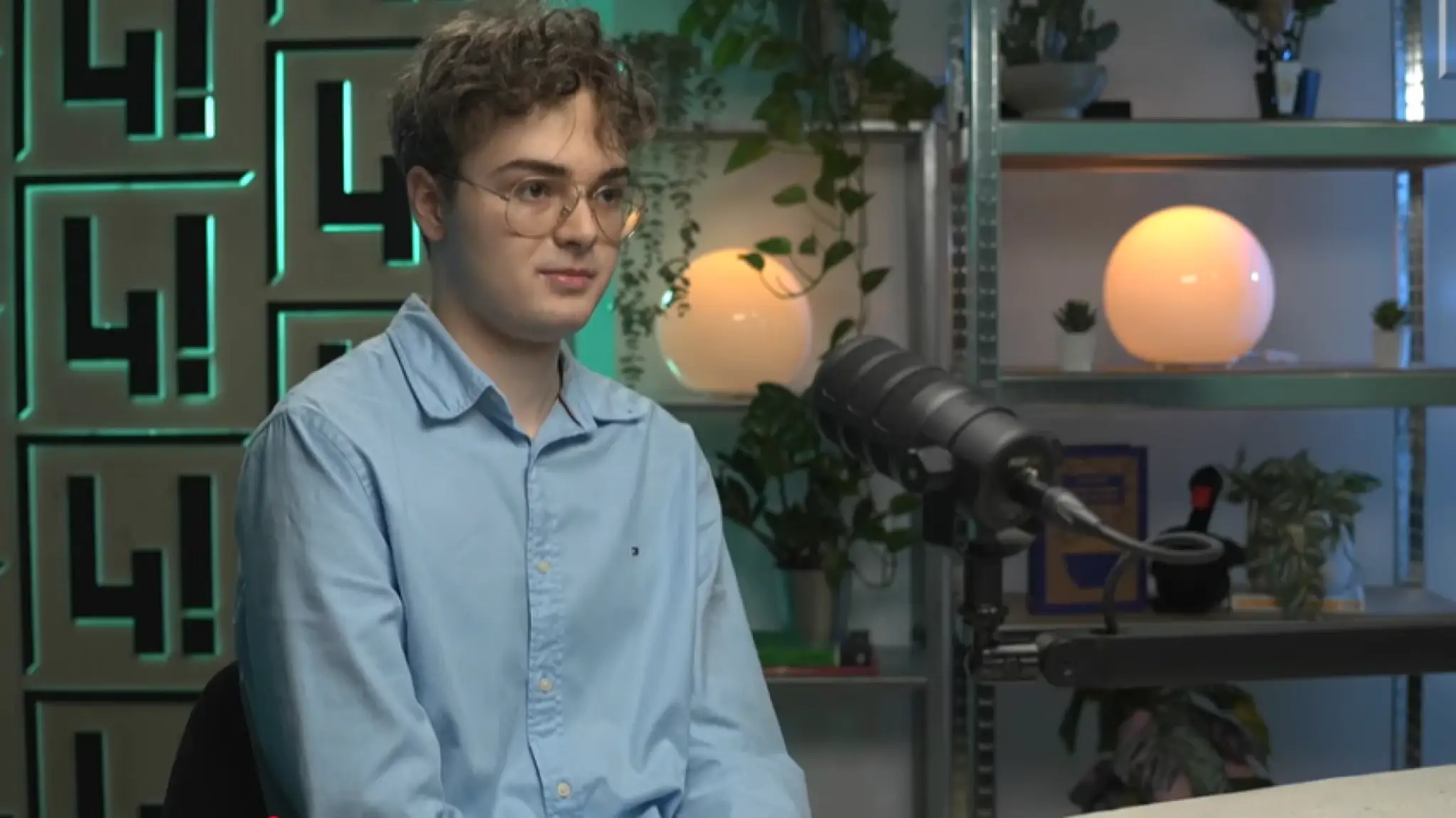
A video of "Gundalf's" questioning was later published on the Hungarian Government's official Facebook page. In it, the young man acknowledged participating in IT operations on Ukraine's behalf, having traveled to Estonia and Kyiv, and having maintained contact with Ukrainian state agencies. Given that information, his surveillance and subsequent questioning by Hungarian services appear logical and justified, even if he later gave the seemingly absurd explanation on 444.hu that he had deceived everyone during his testimony. It is perhaps no coincidence that the young man has since dropped off the radar entirely.
The Wiretap That Was Buried
There was no pause in the action. Into this picture, and into the Partizán studio, stepped Krisztián Sebők, a former officer of Hungary's Constitution Protection Office, who did indeed speak to Márton Gulyás about details of the surveillance of an opposition politician.
The politician under surveillance, however, was not Péter Magyar. It was László Toroczkai.
According to Sebők's account, the surveillance of Toroczkai, then the mayor of the small border municipality of Ásotthalom in southern Hungary, dated back to 2015, and it was no routine affair. The venue where Toroczkai held one of his meetings was bugged, his official vehicle was fitted with a tracker, and the car itself was likely wired as well. The mainstream media essentially buried this surveillance and wiretapping entirely, and understandably so, since this admission was wholly incompatible with their domestic political agenda.
Magyar Jelen was the only outlet to additionally report that members of Légió Hungária, a Hungarian nationalist organization, discovered cameras and microphones installed at the site of their own summer camp. This suggests that surveillance of figures on the so-called far right may well be ongoing to this day.
The Poison That Took Down a Government
On February 9, 2026, Telex published information alleging that workers and residents in the surrounding area had been exposed to staggering levels of contamination at the Samsung battery plant in Göd during the spring of 2023, a facility that had repeatedly come under the spotlight. It was not the first time. Unofficial reports of possible contamination had surfaced as early as 2022, lending legitimate force to criticism of Hungary's genuinely questionable decisions about where to site battery manufacturing plants.
The entire left immediately, and not without justification, came down hard on the government. Yet here is the full picture. The story became publicly known in the first place only because Rogán moved.
Working through the Constitution Protection Office, the government had been trying to determine whether plant officials were concealing data on hazardous contamination from regulatory oversight. The findings came as a shock even to the ministers themselves.
Incidentally, according to the Telex article cited above, Antal Rogán was among the ministers who argued for suspending operations at the Göd Samsung plant. That did not happen. National economic considerations prevailed, and Samsung was given until the fall of 2023 to address the problems.
That effort may have paid off. On April 16, 2026, after the election, Greenpeace published a report stating that its March 2026 measurements had found no significant contamination near the battery plants in Göd, Komárom, or Sóskút. That finding, of course, by no means clears these facilities of all environmental risk to Hungary's ecosystem.
Szabi the Spy Blows Little Péter's Cover
All of the above, however, were at most parts of the dress rehearsal before the big show, even if events were unfolding in parallel. On the morning of March 23, Mandiner (a prominent Hungarian conservative weekly) published an audio recording in which the outlet claimed to present Szabolcs Panyi, a journalist with Direkt36 and VSquare, discussing his own intelligence connections with a woman whose identity remains unknown to this day. The journalist himself later confirmed, incidentally, that it was indeed his voice on the leaked tape.
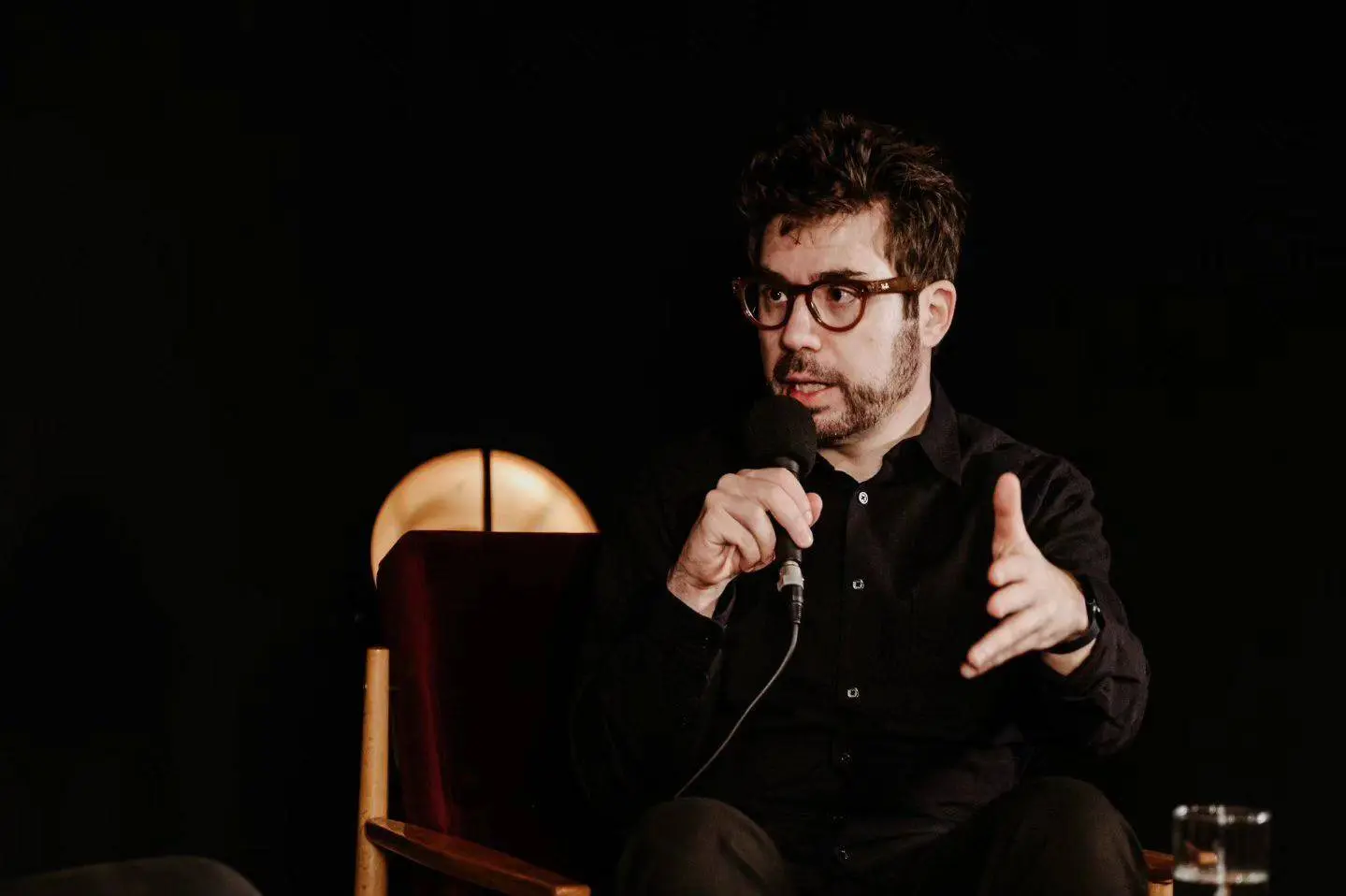
According to the recording, Panyi claims, among other things, to have personally passed the cell phone number of Minister of Foreign Affairs and Trade Péter Szijjártó to the intelligence service of an unnamed foreign country, enabling that service to intercept Szijjártó's calls, including those he conducted with Russian Foreign Minister Sergei Lavrov.
Panyi and VSquare subsequently made public a transcript and several audio recordings of conversations between the two ministers, materials that do raise real concerns about the nature of the Szijjártó-Lavrov relationship.
Equally compelling, however, is the question of how the journalist came to possess transcripts clearly produced using intelligence service methods. The National Investigative Office might have helped clarify this, had it not turned down every criminal complaint filed in connection with the matter, including the espionage complaint filed with police by Minister Gergely Gulyás on March 26 regarding Panyi's activities. Panyi, for his part, denied that he had engaged in espionage.
What we do know is this. According to statements he later retracted, the investigative journalist claims to be on something approaching friendly terms with Anita Orbán (no relation to Viktor Orbán), who after May 9 may serve as both foreign minister and deputy minister in the incoming Tisza government. Panyi himself also acknowledged, on a recording that became public, that his information came from at least three European intelligence services, and that Péter Magyar was aware of this. This again raises the question of why the NNI did not find it worth so much as calling the journalist in for questioning, a journalist who has since left Direkt36.
Europe to Orbán: This Is Not a Game
The process sketched out above only truly hit its mark two days after the election, on April 14, fittingly enough, in a Telex article. András Dezső, a journalist widely considered to have excellent American intelligence connections, wrote the following in the flagship outlet of Hungary's left-wing media.
"(…) it also became clear that Szijjártó had been wiretapped by the intelligence service or services of some foreign state, and that the conversations obtained in this way had been used as a weapon against Orbán's foreign minister."
Neither Szijjártó nor Orbán grasped that Europe is not a game. In the same article, published after the election and after Tisza had secured its parliamentary supermajority, Dezső added:
"The Orbán government's Russia policy had apparently blown a fuse in one or more presumably EU member states, to the point where their intelligence services conducted an active operation to undermine it. The conversations between Szijjártó and Lavrov had been recorded years earlier, but their leaking was the consequence of a political decision, one that is only made when behind-the-scenes warnings no longer carry any weight."
The full details of the active intelligence operations conducted in Hungary, their effect on the election outcome and the precise role of Szabolcs Panyi, may one day be known, perhaps through the work of the National Security Committee, though that does not appear likely anytime soon.
What is certain is that the events and processes that played out both behind the scenes and in plain sight from early spring 2026 onward should serve as a warning not only to Viktor Orbán. What takes shape here is the outline of an operation that unfolded across multiple government cycles, one that in all likelihood is nowhere near finished.
Related:
Az X- és Telegram-csatornáinkra feliratkozva egyetlen hírről sem maradsz le!
Mi a munkánkkal háláljuk meg a megtisztelő figyelmüket és támogatásukat. A Magyarjelen.hu (Magyar Jelen) sem a kormánytól, sem a balliberális, nyíltan globalista ellenzéktől nem függ, ezért mindkét oldalról őszintén tud írni, hírt közölni, oknyomozni, igazságot feltárni.
Támogatás