The Don River Catastrophe
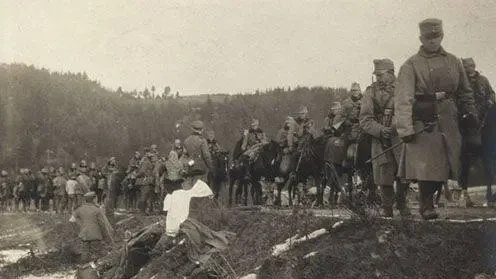 Withdrawal of Hungarian forces toward Limanowa
Vitéz József Bányai wrote to his mother on January 11, 1943. He told her the Russians were preparing something big, and that Hungarian soldiers would hold out to the end. They had sworn an oath to do so. “Don’t wait for letters from me now, and don’t send any either. It is ungodly cold. I sit here by my machine gun and my hand freezes to the empty cup. I know that by the time you receive this card, I will no longer be cold and my hunger will also pass. We will die here.” He left his pocket watch to his younger brother and his enduring love to his mother.
Soviet forces launched a major offensive coordinated with Operation Little Saturn the next day against the Hungarian Second Army positioned along a 200-kilometer stretch of the Don River. Within nine days, 148,000 of the 207,000 Hungarian soldiers deployed became casualties. Temperatures had already dropped to minus 35 degrees Celsius.
Hungary’s military entered the Soviet Union in June 1941 with limited equipment and outdated weaponry. By late 1942, the Second Army held defensive positions between Voronezh and the Italian Eighth Army’s sector. Budapest could not provide the resources required for such an extended front. Winter clothing remained inadequate, anti-tank weapons scarce, and armored support insufficient. German assurances of reinforcement and flexibility proved illusory once the Soviet offensive began.
The Soviet breakthrough came at dawn. Three armies struck simultaneously. The 40th Army, Voronezh Front mobile units, and elements of the Southwestern Front advanced with crushing numerical superiority.
Tanks outnumbered Hungarian armor by ten to one, infantry by three to one, with artillery and air support even more decisively favoring the attackers. At Uryv, Hungarian units held out for days. Soldiers at multiple positions across the front repelled eight or nine consecutive assaults. Then ammunition ran out. Weapons froze in minus 40-degree temperatures, and by the first afternoon, radio communications across most sectors had ceased.
Hungarian defensive positions held for twelve days. The 9th Light Division provided cover for III and IV Corps to withdraw. Hungarian Lieutenant General Marcel Graf Stomm commanded III Corps through two weeks of unrelenting assault, maintaining positions along the Don until January 26 to cover the retreat. Frostbite cost him both legs before his capture. His requests for permission to disengage were repeatedly denied. Bányai remained at his machine gun, saving countless retreating Hungarian soldiers through his sacrifice.
Hungarian units fragmented. Isolated groups attempted to move westward through partisan-controlled territory.
Contact between formations broke down. The 20th Light Division lost communication with neighboring units on the first day. Heavy equipment and artillery pieces were abandoned in snowdrifts. Medical supplies ran out within seventy-two hours. Wounded soldiers left behind faced the Red Army’s advance. They were frequently shot where they lay, and prisoners were marched east under lethal conditions.
A 700-kilometer withdrawal through constant partisan attacks and aerial bombardment followed. No shelter existed in the villages. Aircraft strafed columns throughout daylight hours. In field hospitals, frostbite cases exceeded combat wounds. Of the 9th Light Division’s original 15,000 men, fewer than 3,000 reached Hungarian lines.
Meanwhile, the Wehrmacht was catastrophically retreating from Stalingrad and could offer no support.
Hungarian requests for air support went unanswered. German air assets were concentrated on saving encircled forces elsewhere. A single Luftwaffe squadron conducted reconnaissance flights over the battlefield during the entire operation. The Axis position on the Don had become untenable.
Remnants of the Second Army staggered into German-held territory near Kursk in late January. Records indicate approximately 105,000 men were dead, missing, or captured. As a fighting force, the 12th Light Division had ceased to exist. Eight hundred artillery pieces were lost, along with 300 anti-tank guns and nearly all motorized transport.
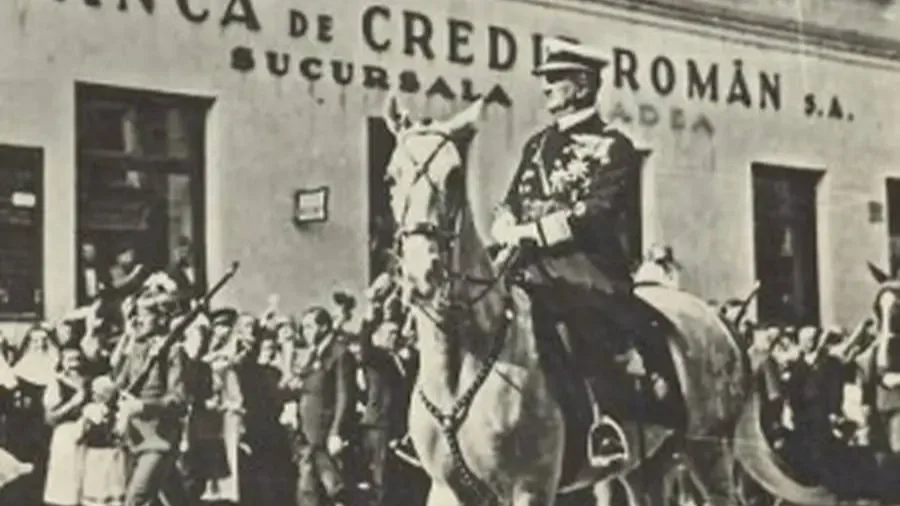
Hungary’s military capacity was shattered. The country never fielded another independent national field army of comparable strength, and Budapest’s relationship with Berlin deteriorated rapidly in the disaster’s aftermath. Admiral Miklós Horthy faced an impossible strategic position, caught between German occupation threats and advancing forces that would decimate Central Europe within two years.
Soviet forces captured 60,000 Hungarian soldiers, who were held in prisoner-of-war camps. Fewer than 7,000 returned home. The last of them came back in 1955. The Don catastrophe stands as one of Hungary’s greatest military losses. They held out to the end, as they had sworn to do.
Sources:
Nemeskürty, István. Requiem egy hadseregért (Requiem for an Army). Magvető Könyvkiadó, 1972.
Szabó, Péter. A Don-kanyar 1942–43 (The Don Bend 1942–43). Petit Real Könyvkiadó, 2001.
Magyar Nemzeti Levéltár (Hungarian National Archives). Second Army operational records, 1942–1943.
Egri Hírek. “83 éve történt a doni tragédia.” January 12, 2026.




Mi a munkánkkal háláljuk meg a megtisztelő figyelmüket és támogatásukat. A Magyarjelen.hu (Magyar Jelen) sem a kormánytól, sem a balliberális, nyíltan globalista ellenzéktől nem függ, ezért mindkét oldalról őszintén tud írni, hírt közölni, oknyomozni, igazságot feltárni.
Támogatás