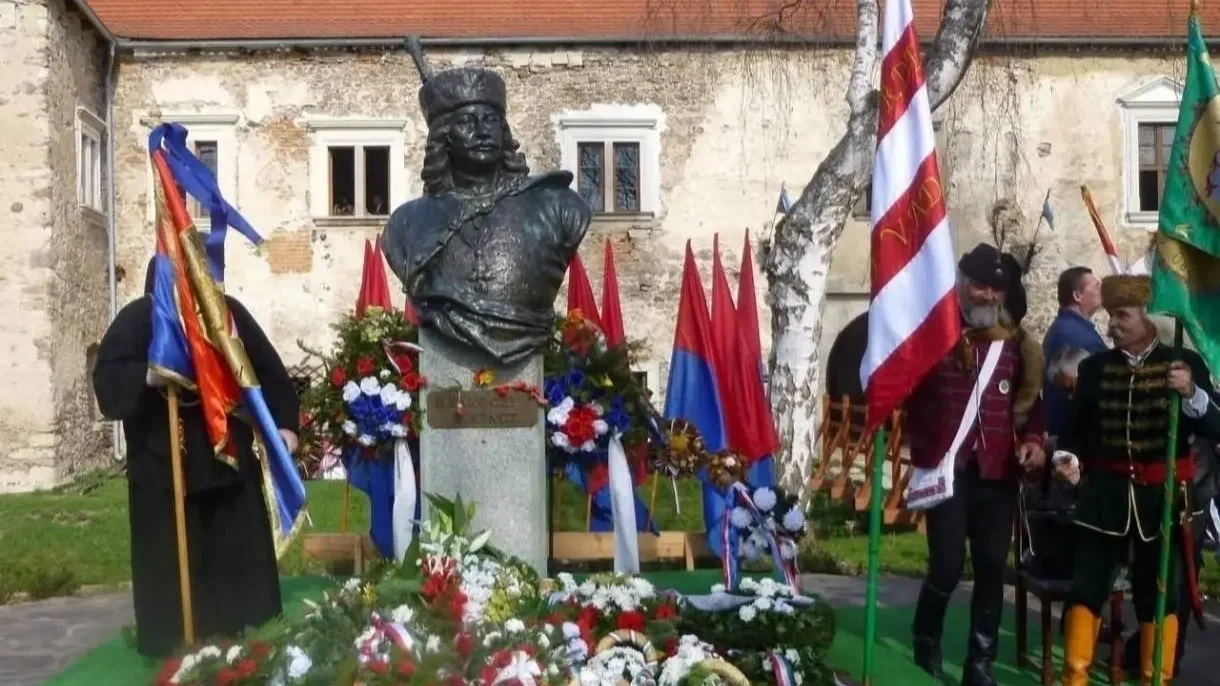
Bottyán's Lightning Strike: The Battle of Saint Gotthard, 1705
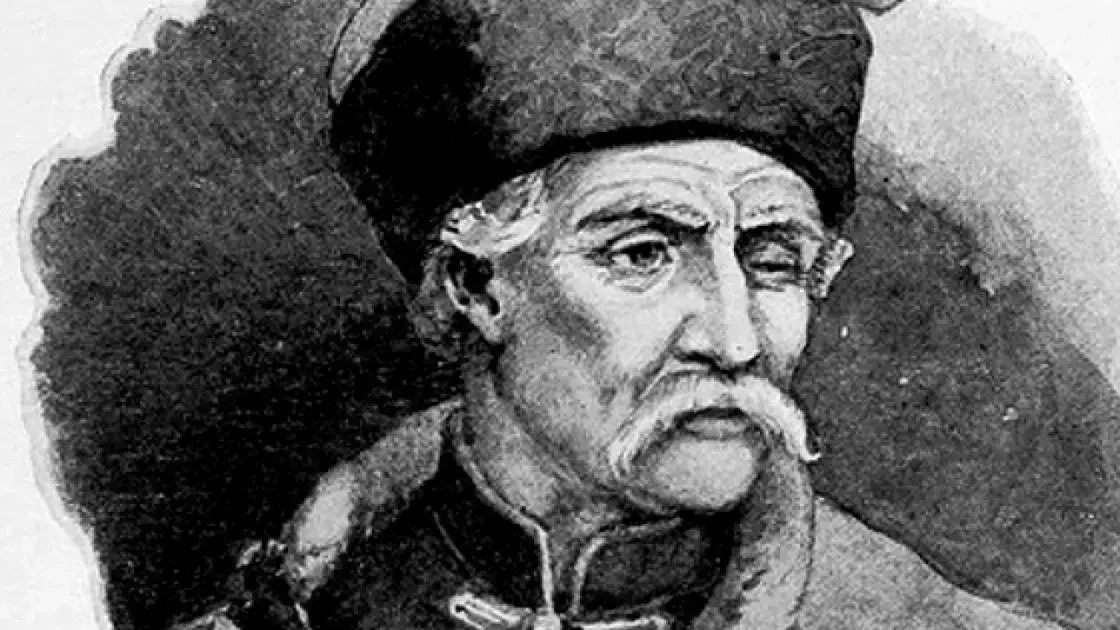 Drawing of János "Blind" Bottyán by Tivadar Dörre
The snowbound hills along the western Austrian frontier saw a turning point in the Rákóczi war of independence on December 13, 1705. Ferenc Rákóczi’s forces had secured control of much of Upper Hungary by late 1705, but Transdanubia remained under Habsburg rule. The western territories mattered because they provided revenue from estates and access to major trade routes, and the population there had not yet committed itself to either imperial loyalty or the Kuruc independence cause.
János Bottyán, known as Vak Bottyán, or Blind Bottyán, established his reputation during the Ottoman wars as a Habsburg cavalry officer. He lost an eye in combat and rose to wealth through military service in Esztergom. When he joined Rákóczi’s cause in 1703, he forfeited both property and imperial favor. Rákóczi entrusted him with command of the campaign to take Transdanubia.
Bottyán crossed the Danube at Solt on November 2, 1705, with 8,000 men. He sent Béri Balogh Ádám with the southern column toward Pécs and Szigetvár, while leading the central column himself against fortified towns along the way. Imre Bezerédy’s cavalry moved north to secure the flanks. Within weeks, local nobles and peasants joined the campaign and expanded the army to nearly 30,000 men. News of Kuruc victories spread quickly, drawing support for the independence struggle among Transdanubian nobility and common people alike. At Kőszeg, German, Hungarian, and Slovene residents aided the siege operations.
Simontornya fell on November 11. That same day, Rákóczi suffered defeat at Zsibó in Transylvania, but the distance between the theaters meant each event unfolded independently. Bottyán pressed west and took Pápa, then Tata. Kőszeg surrendered on December 10. With the border region exposed, the road west lay open.
Imperial forces in the region were commanded by Hannibal Heister at Szentgotthárd. Austrian infantry formed the core of his force, reinforced by Croatian troops and Serbian auxiliary units drawn from the Military Frontier. Heister’s brother Sigbert Heister held command in other Habsburg theaters.
Bottyán bypassed Szombathely and struck south against Heister. The attack came between Nagyfalva (Mogersdorf) and Szentgotthárd, on ground long familiar to Hungarian memory, where imperial forces had defeated the Ottoman army in 1664. Bottyán’s light horsemen hit Heister’s Serbian auxiliaries hard and fast, exploiting speed and terrain before heavier units could respond.
Bezerédy rode in from Kőszeg during the fighting. His cavalry broke the imperial left. Habsburg troops fled north into Styria. A contemporary Kuruc verse captured the moment: “At Szentgotthárd’s famous fields / He struck the country’s marauding Serbs / Into Styria his weapons chased them.”
Heister withdrew to Városszalónak (Stadtschlaining). Bottyán pursued briefly, then turned back to secure his gains. Beginning the campaign at Kecskemét with 8,000 men, he expanded his force through local recruitment. One fortress after another fell. Two imperial armies withdrew from Hungarian territory.
The population called him John the Benefactor (Jótevő János) because he enforced strict discipline against pillaging and protected civilians, earning loyalty not through fear but restraint.
The campaign demonstrated that light cavalry could still prevail against the linear tactics and massed infantry that dominated European warfare. Bottyán fought in the tradition of Hungarian commanders before him, relying on speed, surprise, and intimate knowledge of terrain. His methods exploited weaknesses where heavier forces could not react in time. Vienna was stretched thin by the War of the Spanish Succession, and Heister’s defeat exposed those limits.
Transdanubia came under Kuruc administration, and Rákóczi appointed Bottyán governor of the region. But the defeat at Zsibó weakened Rákóczi’s position in Transylvania. Habsburg forces retook Transdanubia in 1706 and 1707, though Bottyán’s resistance delayed their advance and imposed real costs.
Bottyán died of plague in September 1709, loyal to Hungarian freedom to the end. Rákóczi’s war of independence concluded two years later with the Peace of Szatmár. Hungarians remember Szentgotthárd as the Kuruc war’s high point in the west, a winter victory that showed independence was not a dream but a possibility, a December day when cavalry charges could still decide battles and Hungary’s future briefly lay within reach.
Sources:
Magyar Nemzet: Bottyán’s Second Transdanubian Campaign and the Battle of Szentgotthárd (December 13, 2022)
Rubicon: December 13, 1705. Blind Bottyán Wins Victory at Szentgotthárd
Szentgotthárd Local History Association: Events of the Year 1705
Kálmán Thaly: János Bottyán, Commanding General of Prince Ferenc II Rákóczi (Pest, 1865)
Kálmán Thaly: The Correspondence of Commanding General János Bottyán and Other Notable Documents Concerning Him, 1685–1716 (Budapest, 1883)
Arcanum Newspapers: The Rákóczi War of Independence in the 18th Century, 1865–1936 Archive





Mi a munkánkkal háláljuk meg a megtisztelő figyelmüket és támogatásukat. A Magyarjelen.hu (Magyar Jelen) sem a kormánytól, sem a balliberális, nyíltan globalista ellenzéktől nem függ, ezért mindkét oldalról őszintén tud írni, hírt közölni, oknyomozni, igazságot feltárni.
Támogatás